What is a Forensic Audit?
What is a Forensic Audit?
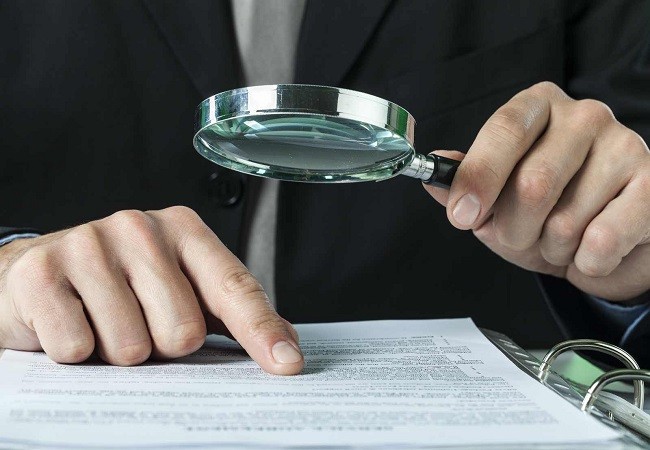
Forensic Audit/Accounting is the process of using the company’s accounting records to investigate possible fraud or other criminal activity. Such services help to examine and provide a basis for evaluation of a company’s accounting records and financial information, to be used, if required so, in legal proceedings. Companies conduct forensic audits to sue the culprits convicted for fraud, robbery or other financial misconduct.
No company can ever have a system that’s absolutely fool proof. In this era of global linkages, every existent company is vulnerable to loss and failure. High- stake matters involving fraud, corruption, accounting irregularities, bribery by employees, collaborative deception by management, and compliance issues are often backed up by trust, credibility, and resources.
Who initiates a Forensic Audit?
Generally, it is ordered by Stakeholders, Banks, Regulatory Authority, Financial Institutions, Court. Forensic Audit is to confirm and evaluate the fraud with concrete evidence and documents.
Why Forensic Audits Are Usual especially in the UAE?
UAE is one of the largest hubs of business and wealth. Companies in the UAE hold a diversity of cultures, having employees from almost every region of the world. Such great excellence and versatility where at one end is fabulous, at the other end exposed to greater threats of fraud, misconduct, formal disputes, and manipulation of internal controls.
Forensic Accounting Services in UAE will help the company not only to avoid and identify fraud, misconduct, violations of regulations but will also suggest appropriate means for:
✔ Effective internal controls.
✔ Reduce exposure to commercial loss.
✔ Easy ways to avert and settle disputes.
✔ Prevent criminal activity.
✔ Consistent and close monitoring of activities.
Who Needs a Forensic Audit in UAE?
What if we tell you that your future uncertain losses can be effectively avoided? HOW? Through detailed, beforehand investigations known as forensic audits.
If you’re running a company, and want to turn complex issues into:
✔ opportunities for resilience
✔ long-term advantage
✔ good governance &control
You definitely need reputed and qualified accounting firms, to help & guide you to take steps towards anti-corruption, accountability and asset recovery, enabling you to gain the trust of the public and foreign investors. If your company aims to establish better standards for:
● transparency,
● effective internal controls and
● frameworks for managing the risks of corruption and fraud
All you need is, Forensic Audit Services assist you in the use of best practices and applied technologies for preventing and detecting error and unethical conduct, ultimately leading to success.
The benefit of conducting a Forensic Audit-
Forensic Audit is more than a normal Audit. It involves investigations that may expose or confirm illegal activities with concrete evidence. The normal Audit might serve the purpose of its presentation in court, but the Forensic Audit Report is used in the Court of Law or legal proceeding.
Frauds or crime resulted from performing the Forensic Audit will be following:
1. Corruption
2. Misappropriation of Assets
3. Financial Statements Fraud
Forensic Audit Services involve a detailed evaluation of records and documents to obtain and extract evidence against the Crime or Fraud that can be used in a court of law or legal proceeding. Going by the general definition of the term Forensic means application of scientific methods and techniques in the investigation process.
Forensic Audit Services are generally on financial frauds. It requires the utmost expertise and knowledge in the field of accounting & auditing. Forensic Audits are ordered by external parties to gather the evidence. For e.g., Banks may order Forensic Audits on Non-Performing Assets, or for accounts where funds are not utilized by borrowers for the purpose for which they were borrowed, and so on.
Services rendered by Forensic Auditors:
The following services will be provided to the organization by forensic auditors;
● Identifying documents to be requested and/or subpoenaed.
● Identifying individuals to be most knowledgeable of facts.
● Conducting research relevant to the facts of the case.
● Identifying and preserving key evidence.
● Evaluating produced documentation and information for completeness.
● Analysing produced records and other information for facts.
● Identifying alternative means to obtain key facts and information.
● Providing questions for deposition and cross examination of fact and expert witnesses.
How is a Forensic Auditing analysis different from an Audit?
The general public believes that a financial auditor would detect a fraud if one were being perpetrated during the financial auditor's audit. The truth, however, is that the procedures for financial audits are designed to detect material misstatements, not immaterial frauds.
While it is true that many of the financial statements and frauds could have, perhaps should have, been detected by financial auditors, the vast majority of frauds could not be detected with the use of financial audits. Reasons include the dependence of financial auditors on a sample and the auditors' reliance on examining the audit trail versus examining the events and activities behind the documents. The latter is simply resource prohibitive in terms of costs and time.
| Forensic Auditing | ● In response to an event. ● Financial investigation. ● Finding used as evidence in court or to resolve disputes. |
| Audit | ● Mandatory. ● Measures compliance with reporting standards. ● Obtain reasonable assurance that financial statements are free of material misstatement. |